Introduction — Why Surah Al-Waqi’ah matters
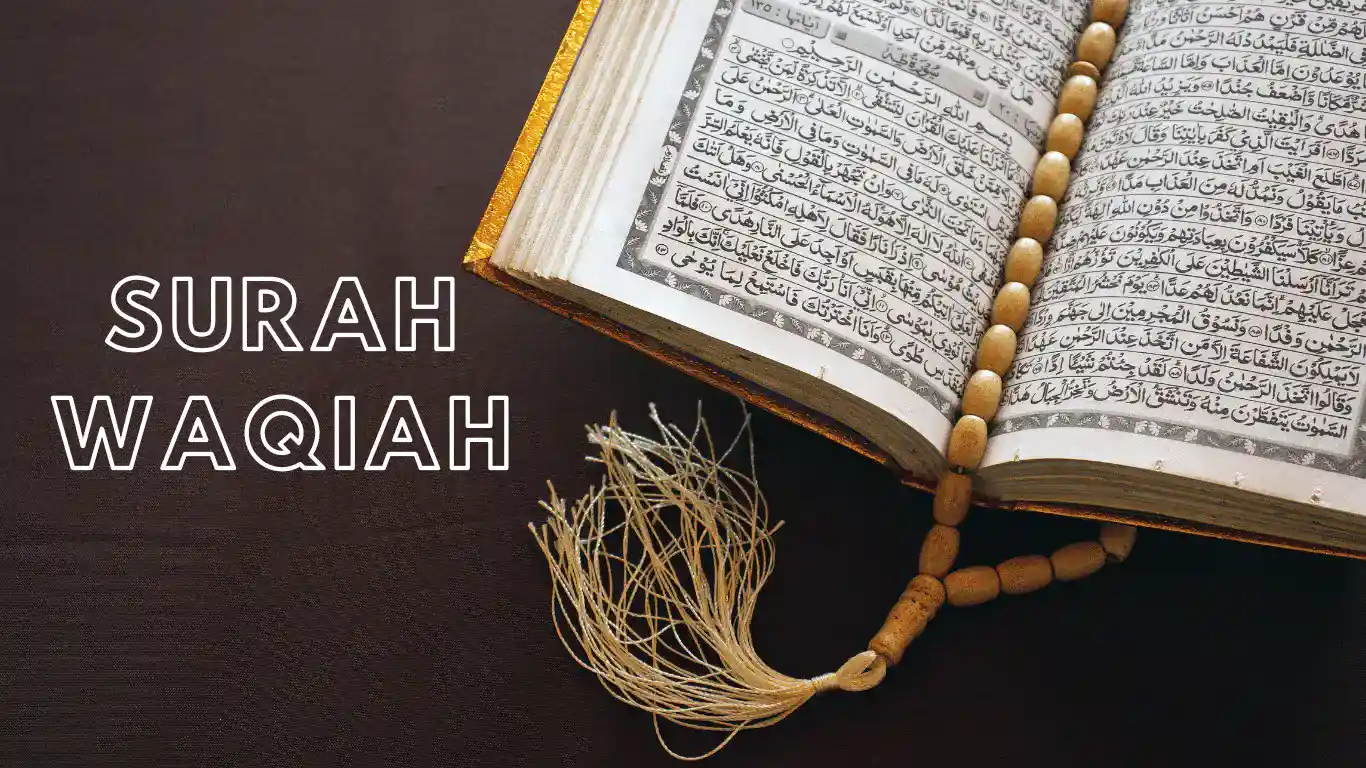
Surah Al-Waqi’ah (Arabic: الواقعة) is the 56th chapter of the Qur’an. It is often translated as “The Inevitable” or “The Event” — referring to the Day of Judgment, a day that no soul can deny. Wikipedia+1
- It consists of 96 verses (ayat). Wikipedia+1
- It was revealed in Makkah (i.e. it’s a “Makki” surah).
- The main themes: the reality of the Last Day, different fates for humankind, scenes of Heaven and Hell, and a reminder of Allah’s absolute power in creation, resurrection, and provision.
For believers — whether new or lifelong — Surah Al-Waqi’ah serves as a powerful reminder of why we live, why we strive, and what awaits every soul. In this article, we explore its meaning, its lessons, and how it can transform hearts.
| Surah Baqarah last 2 Ayat with Urdu translation |
| Surah Baqarah Last 3 Ayat with Urdu Translation |
| Surah Fatiha 1st Chapter of the Quran |
| Last 10 Surahs of Quran: A Divine Conclusion |
Why classical scholars honoured Surah Al-Waqi’ah
According to Tafsir Ibn Kathir — one of the most respected Sunni commentaries — the surah strikes deep: it confronts the believer with clear imagery of the Day of Resurrection, the final reckoning, and the eternal outcomes.
There is a known narration where a companion (reportedly) said to the Prophet ﷺ, “O Messenger of Allah, your hair has turned gray.” The Prophet ﷺ replied:
«شَيَّبَتْنِي هُودٌ وَالْوَاقِعَةُ وَالْمُرْسَلَاتُ وَعَمَّ يَتَسَاءَلُونَ وَإِذَا الشَّمْسُ كُوِّرَت»
“Hud, Al-Waqi’ah, Al-Mursalat, ‘Amma Yatasa’alun and Idha ash-Shamsu Kuwwirat have made me grey.”
This statement reflects the weight and seriousness of the messages in those surahs — they are not mere stories, but realities that affect hearts and souls.
Thus, reading and reflecting on Surah Al-Waqi’ah is spiritually beneficial — it awakens awareness of the Hereafter and calls for self-accountability.
Selected Verses from Surah Al-Waqi’ah (with Translation & Reflection)
Because including all 96 verses with translation might make the article extremely long, I’ll present some pivotal verses (with English translation and transliteration) — especially those that encapsulate the core message — and follow them with explanatory tafsir and reflection.
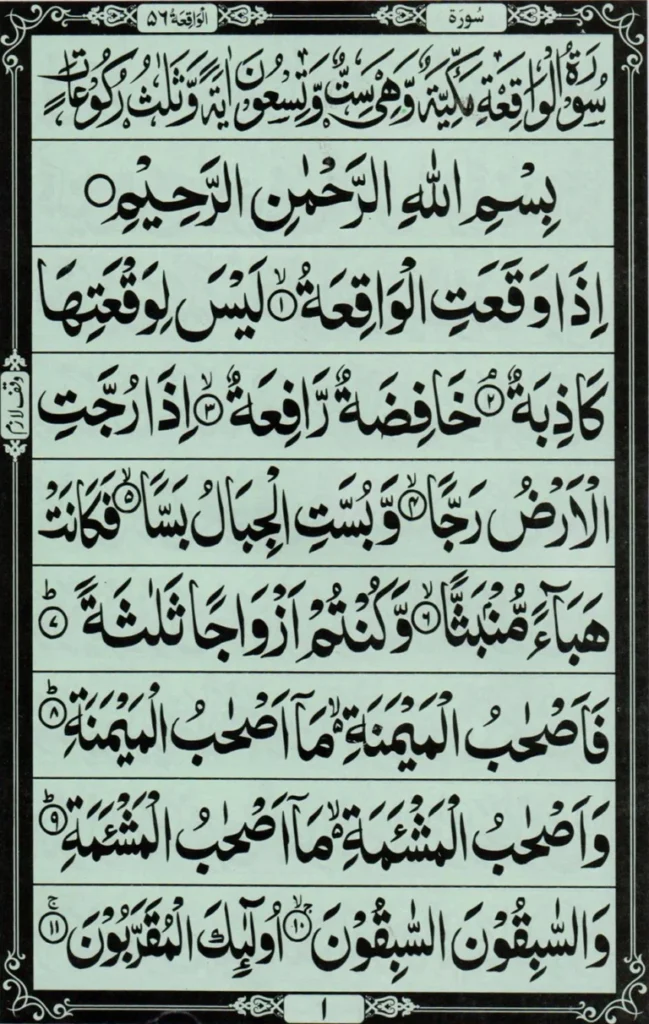
1:
2:
3:
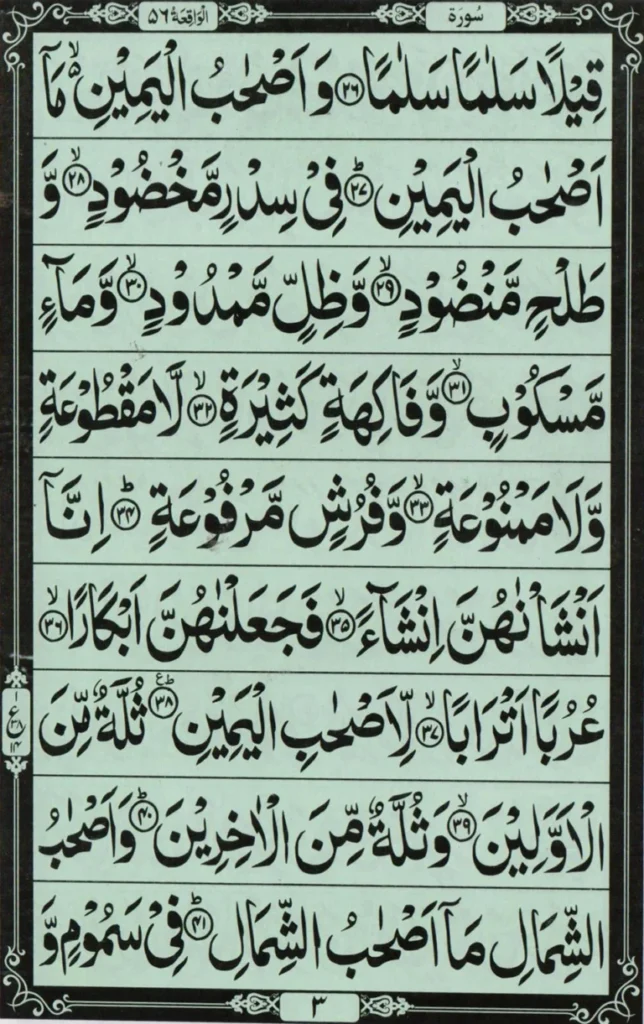
4:
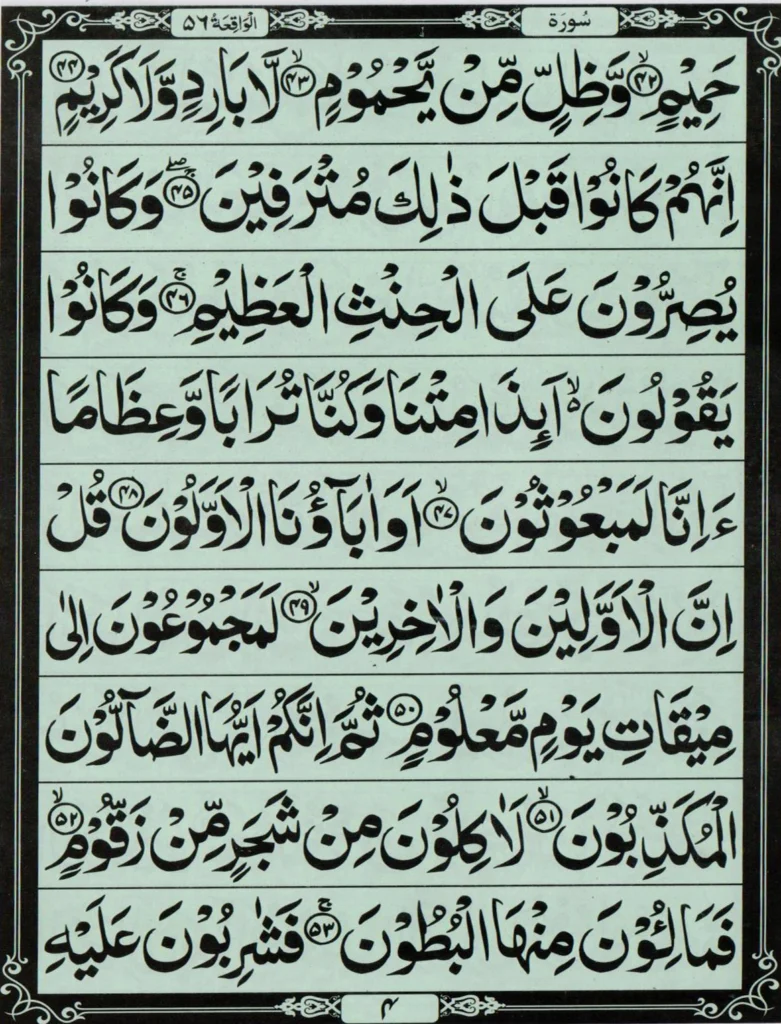
5:
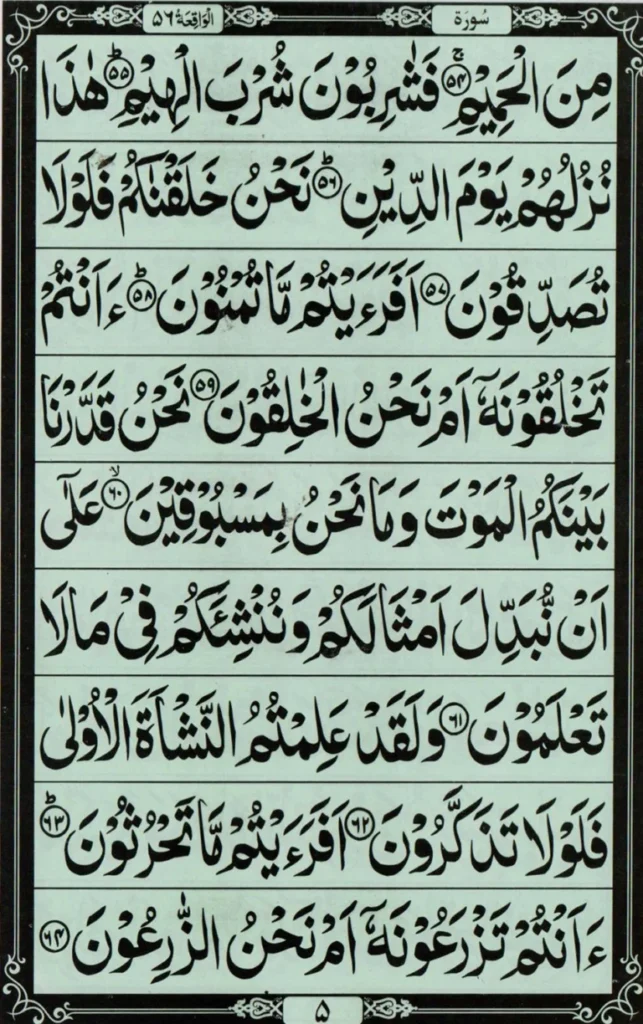
6:
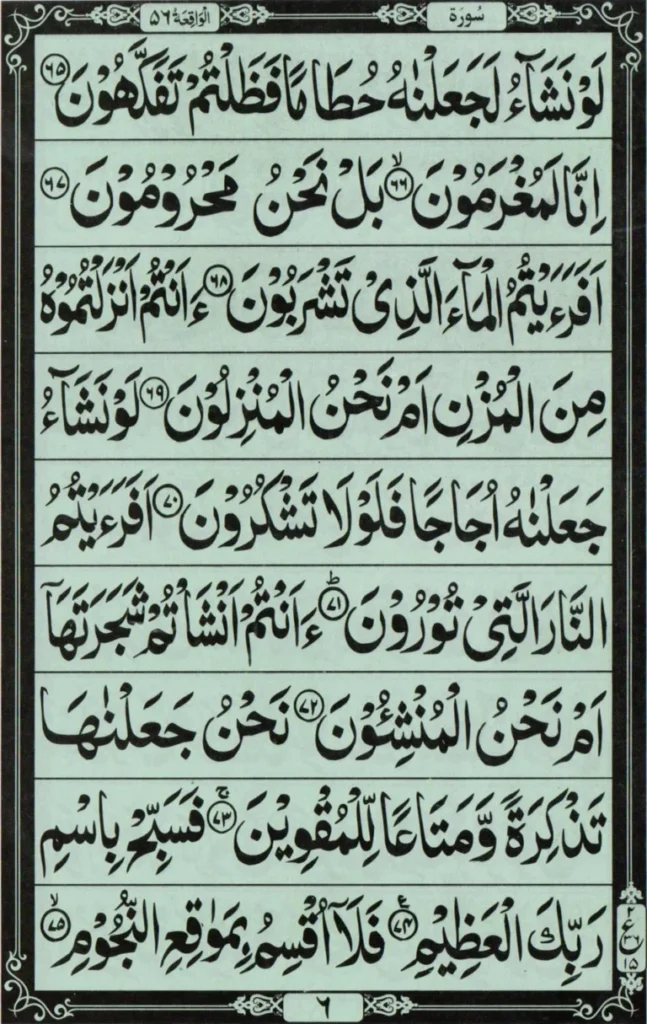
7:
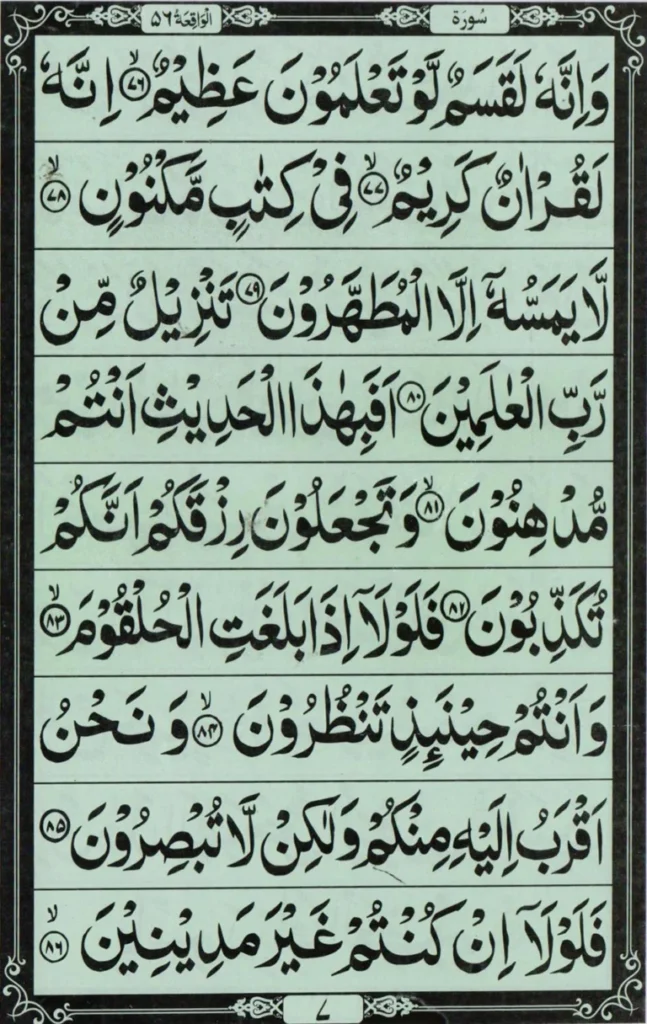
8:
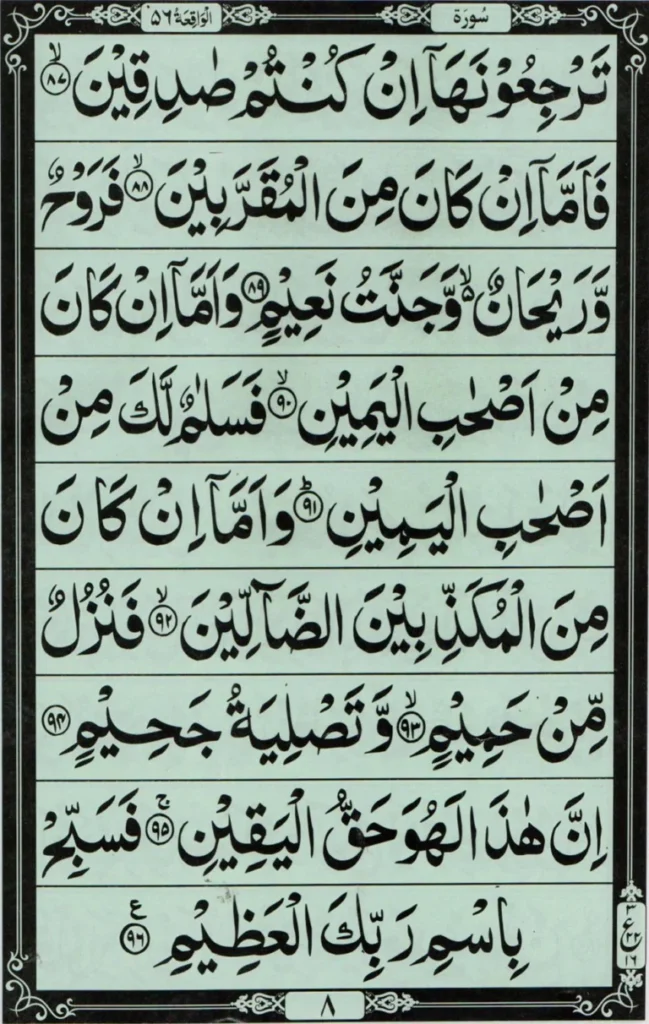
إِذَا وَقَعَتِ الْوَاقِعَةُ
Idhā waqaʿatil-Wāqiʿah
When the Inevitable Event (the Day of Judgment) occurs,
لَيْسَ لِوَقْعَتِهَا كَاذِبَةٌ
Laysa li-waqʿatihā kādhibah
There is no denying its occurrence,
خَافِضَةٌ رَّافِعَةٌ
Khāfidatun rāfiʿah
It will abase some, and exalt others,
إِذَا رُجَّتِ الْأَرْضُ رَجًّا
Idhā rujjati l-arḍu rajjā
When the earth will be shaken with a terrible shake,
وَبُسَّتِ الْجِبَالُ بَسًّا
Wa bussatil-jibālu bassā
And the mountains will be crumbled utterly,
فَكَانَتْ هَبَاءً مُّنبَثًّا
Fa kānat habā’an munbaththā
And become scattered dust,
وَكُنتُمْ أَزْوَٰجًا ثَلَاثَةً
Wa kuntum azwājan thalāthah
And you will be (divided into) three kinds.
Meaning & Reflection:
This opening immediately captures the reality: the Day of Judgment is not a myth — it’s inevitable. On that day, the earth will shake, mountains crumble, and humanity will be divided into three groups (as Surah will go on to explain). It is a wake-up call. It reminds us that our world — and all its pride, wealth, and security — is temporary.
For many believers, imagining this day stirs fear, humility, and the urge to prepare — not materially, but spiritually.
The Three Groups: Right, Left & The Foremost
Later verses (8–11, summarized) explain that on that Day, people will be divided into three categories:
- The People of the Right (Aṣḥāb al-Yamīn) — those who earned Allah’s pleasure.
- The People of the Left (Aṣḥāb al-Mashʾamah) — those who rejected or ignored truth.
- The Foremost / The Nearest (As-Sābiqūn / Al-Muqarrabūn) — the highest rank, those closest to Allah, honored in the Gardens of Bliss.
Ibn Kathir comments that this division is not based on worldly status, wealth or lineage — but purely on faith, sincerity, and righteous deeds.
This teaching holds a timeless moral: in this life’s race for status, name, and wealth — the true value is in good deeds, humility, and seeking Allah’s pleasure.
The Rewards for the Righteous: Glimpses of Paradise
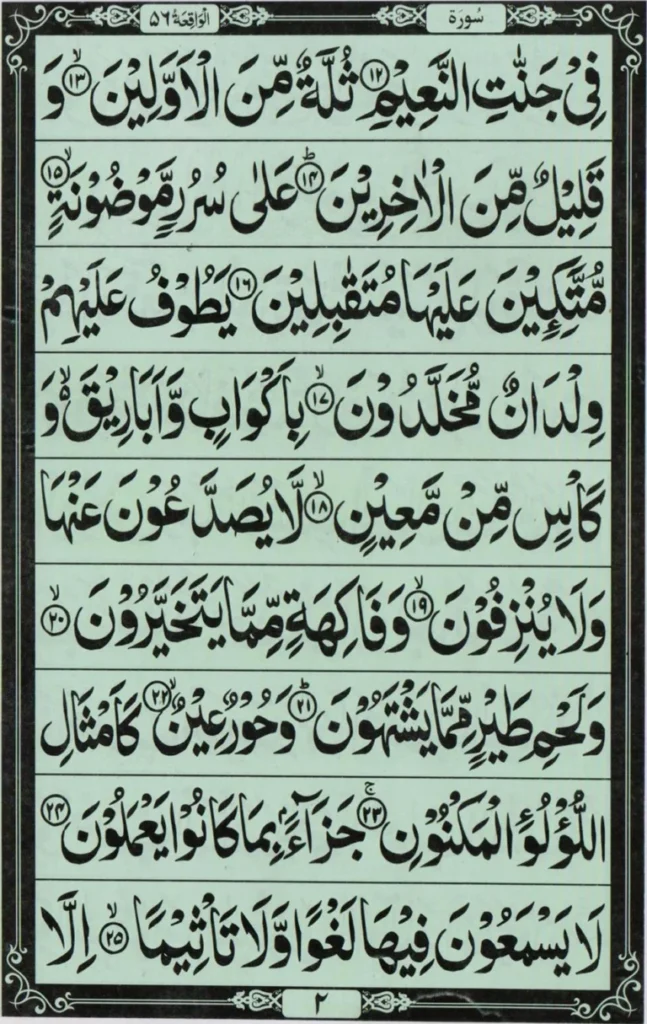
Later in the Surah (verses 17–24, and 31–38, among others), a vivid picture of Paradise is painted:
- Thrones of honor.
- Immortal youth serving, with cups, jugs of pure drink, fruits, bird flesh — whatever one desires (with no pain, no intoxication, no sin).
- Houris (pure companions) — described as “como pearls, well-guarded” (symbolic of purity, dignity).
- Peaceful greetings, no vain speech, no sin — only “Salām, Salām” (peace, peace).
Ibn Kathir and classical scholars interpret these descriptions as spiritual & moral rewards — symbols of eternal comfort, dignity, and nearness to Allah.
The promise of Paradise encourages believers to live with purpose, integrity, and hope.
What Surah Al-Waqi’ah teaches us: Key Lessons & Spiritual Reflections
From the verses and the classical commentary, we derive profound lessons — deeply relevant to our lives today:
- Life is temporary; the Hereafter is real.
— Earthly comforts, social status, wealth — all are fleeting. What lasts is our deeds and faith. - True honor lies in righteousness.
— On the Last Day, what will raise a person is not worldly status but piety, humility, and good deeds. - Death and resurrection are inevitable.
— We all must face accountability. This awareness should shape how we live today. - Paradise is real — and it reflects Allah’s justice, generosity, and mercy.
— The descriptions comfort believers, motivate hope, and offer spiritual solace. - Urgent self-examination & reformation.
— If you live heedlessly, Surah Al-Waqi’ah wakes you up. If you strive, it strengthens your resolve.
What About the Reported Benefits of Reciting Surah Al-Waqi’ah?
There is a popular belief among many Muslims that reciting Surah Al-Waqi’ah regularly (especially every night) prevents poverty and brings blessings (rizq).
However, classical scholarly assessment — including modern reviews — has raised concerns about the authenticity of such claims. According to one detailed analysis: the hadiths attributing such benefits to the Surah have weak or fabricated chains of narration.
That does not mean the Surah is not virtuous. Recitation of any part of the Qur’an is rewarding. The strength lies in understanding, reflection, and living by its teachings — not in magical guarantees. As one contemporary scholar put it, “reading Surah Al-Waqi’ah or even a verse of it is a meritorious act that Allah alone rewards.”
So treat such “benefits” as possible blessings, not as guaranteed formulas.
Who Should Read / Reflect on Surah Al-Waqi’ah — Beginners & Experienced Both
One of the strengths of this Surah: it speaks to every believer — whether you are:
- A new Muslim, learning about faith, accountability, hope.
- A youth or student, facing life’s challenges, decisions, ambitions.
- A scholar or advanced student — wanting deeper tafsir and spiritual growth.
Its message is universal and timeless: about human dignity, final judgment, mercy, justice, and eternal life.
My Personal Reflection — Why Surah Al-Waqi’ah Moves Me
Sometimes I find myself absorbed in daily worries — work, studies, ambitions, social pressure. In those moments, I open Surah Al-Waqi’ah and recite the opening verses. The imagery jolts me back: “Earth will shake… mountains will crumble… you will be divided into three groups.”
It’s as if the Qur’an whispers: “Don’t get lost in this temporary world.”
This Surah reminds me that every moment counts — that every action, every intention, every silent prayer, matters. It motivates me to do better, to be kinder, more honest, more conscious.
When I imagine the scenes of Paradise described — no pain, no sorrow, pure peace, eternal dignity — my heart feels hopeful. And when I think of the alternative, I feel urgency to reform.
In short: Surah Al-Waqi’ah brings both hope and fear — hope from Allah’s mercy, fear from human accountability. That balance is the heart of real faith.
Conclusion — Let Surah Al-Waqi’ah Transform Your Life
If you’ve never studied Surah Al-Waqi’ah deeply — I encourage you to start. Read a few verses a day. Reflect. Let it change how you view life, death, purpose, and destiny.
Whether you are a new believer or have decades of faith — this Surah has something for your heart.
May Allah guide us to live with awareness of the Hereafter, to strive sincerely, to be among the righteous, and to meet Him with hearts full of hope, humility, and peace. Ameen.
FAQs:
Surah Al-Waqi’ah primarily focuses on the Day of Judgment, the consequences of our actions, and the importance of preparing for the afterlife.
Surah Al-Waqi’ah is known for its vivid descriptions of the Day of Judgment, the rewards for the righteous, and the punishment for the wicked. It has a significant impact on listeners and readers, inspiring reflection and contemplation.
Reciting and reflecting on Surah Al-Waqi’ah can strengthen our faith, increase our awareness of the Day of Judgment, and motivate us to lead a righteous life. It can also provide comfort and guidance during challenging times.
It is the 56th chapter (Surah 56).
It is a Makki surah — revealed in Makkah before Hijrah.
he inevitability of the Day of Judgment; classification of people into groups based on deeds; vivid description of rewards and punishments; the power of Allah in creation and resurrection; reminder to live righteously.
Reciting the Qur’an is always good — but avoid treating it as a magic charm. The real benefit lies in understanding, reflecting, and acting according to its guidance. The hadiths praising its “poverty prevention” are weak or unauthentic according to many scholars.
Read slowly — verse by verse. Try to understand the meaning, reflect on your life, make dua (supplication) and strive for good deeds. Use a decent translation + tafsir like Tafsir Ibn Kathir for deeper insight.