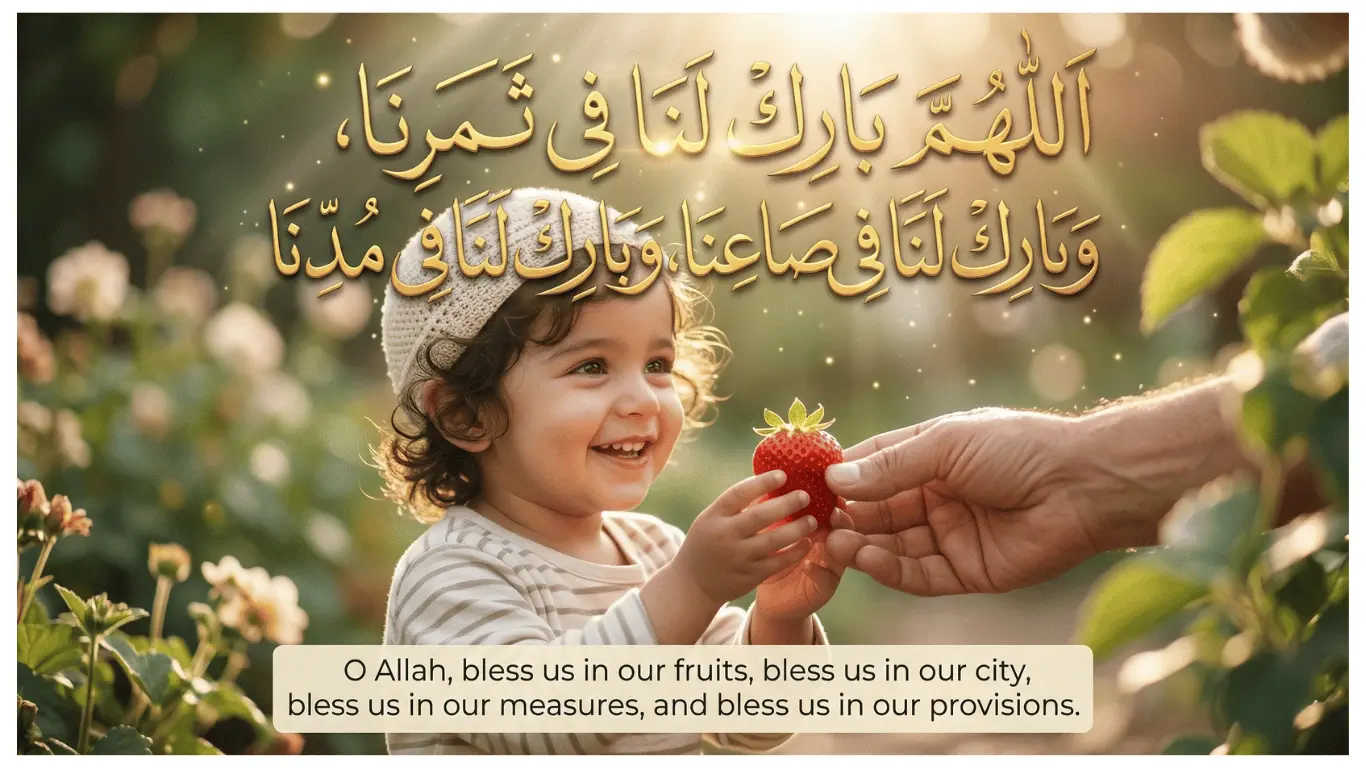
Have you ever wondered why the first bite of a seasonal fruit feels like a celebration, yet we often swallow it without a second thought? In our fast-paced, “grab-and-go” world, we’ve lost the connection between the nutrient and the Nourisher. What if I told you that a 10-second prophetic habit could literally “unlock” the spiritual and physical energy (Barakah) within your food?
What is the Dua for Eating Fruit (Phal Khane Ki Dua)?
The Dua for eating fruit is a specific supplication taught by Prophet Muhammad (ﷺ) to seek blessing (Barakah) in the harvest and the city’s economy. It is a spiritual reset that transforms a simple act of snacking into a high-reward act of worship.
To recite the Dua for eating fruit, say: Allahumma barik lana fi thamarina, wa barik lana fi madinatina, wa barik lana fi sa’ina, wa barik lana fi muddina. This translates to asking Allah for blessings in our fruits, our city, and our measurements (sustenance).
The Multilingual Quadrant: Core Proof
- Arabic: اللَّهُمَّ بَارِكْ لَنَا فِي ثَمَرِنَا ، وَبَارِكْ لَنَا فِي مَدِينَتِنَا ، وَبَارِكْ لَنَا فِي صَاعِنَا ، وَبَارِكْ لَنَا فِي مُدِّنَا
- Transliteration: Allahumma barik lana fi thamarina, wa barik lana fi madinatina, wa barik lana fi sa’ina, wa barik lana fi muddina.
- English (Saheeh International): O Allah! Bless us in our fruits, bless us in our city, and bless us in our Sa’ and our Mudd (measurements of sustenance).
- Urdu (Jalandhari): اے اللہ! ہمارے پھلوں میں برکت دے، ہمارے شہر میں برکت دے اور ہمارے صاع اور مد (ناپ تول) میں برکت عطا فرما۔

The Scholarship Depth: Why This Specific Wording?
Classical mufassirun like Imam Nawawi explain that this Dua is unique because it links the individual’s food directly to the community’s prosperity. When we ask for Barakah in the Thamar (fruit), we aren’t just asking for vitamins; we are asking for the fruit to satisfy our hunger and provide energy for good deeds.
The 2026 Context: In an era of inflation and global food shortages, this Dua is your “Economic Shield.” By citing the Sa’ and Mudd (traditional units of measure), we are asking Allah to make a small amount of food go a long way—a concept we call Spiritual Biohacking. You are optimizing the “output” of your nutrition through Divine intervention.
The Spiritual Habit Loop: When to Say It?
The Sunnah isn’t just about the words; it’s about the timing. According to Sahih Muslim (1373), whenever the people saw the first-ripe fruit of the season, they would bring it to the Messenger of Allah (ﷺ). He would recite this Dua and then give the fruit to the youngest child present.
You should recite the Phal Khane Ki Dua the moment you see or receive the first fruits of the season. This practice instills a “Spiritual Habit Loop” where the sight of provision immediately triggers a response of gratitude, securing the spiritual victory of gratitude in your daily life.
Benefits of the “Fruit Sunnah”
Here’s why this matters for you beyond just the reward (Thawab):
- Mindfulness: It forces a “pattern interrupt,” stopping you from mindless eating.
- Abundance: It invokes the name of Al-Wadud (The Most Loving). By recognizing the sweetness of the fruit, you are healing the heart through Divine Love.
- Community Barakah: You are praying for your entire city’s prosperity, not just your own plate.
Tafseer: Words by Words Analysis
| Arabic Word | Meaning | Deep Insight |
| Thamarina | Our Fruits | Refers to all types of produce and harvests. |
| Madinatina | Our City | Links your personal meal to the safety of your home. |
| Sa’ina / Muddina | Our Measures | A prayer for “Barakah” in the quantity of your food. |
For a complete list of daily supplications, you can refer to this Comprehensive Masnoon Dua Encyclopedia.
People Also Ask:
The prayer is “Allahumma barik lana fi thamarina,” which asks Allah to bless the fruit, the city, and the measurements of our food. It is found in Sahih Muslim and is recommended when eating the first fruit of the season.
You should recite the Masnoon Dua for fruit and, if possible, follow the Sunnah by offering the first bite to the youngest person in the gathering to spread joy and Barakah.
We pray to acknowledge that the fruit is a gift from Allah. This turns a physical act of eating into a spiritual act of worship, ensuring the food provides maximum benefit to our body and soul.