What Does Barakallahu Feekum Mean?
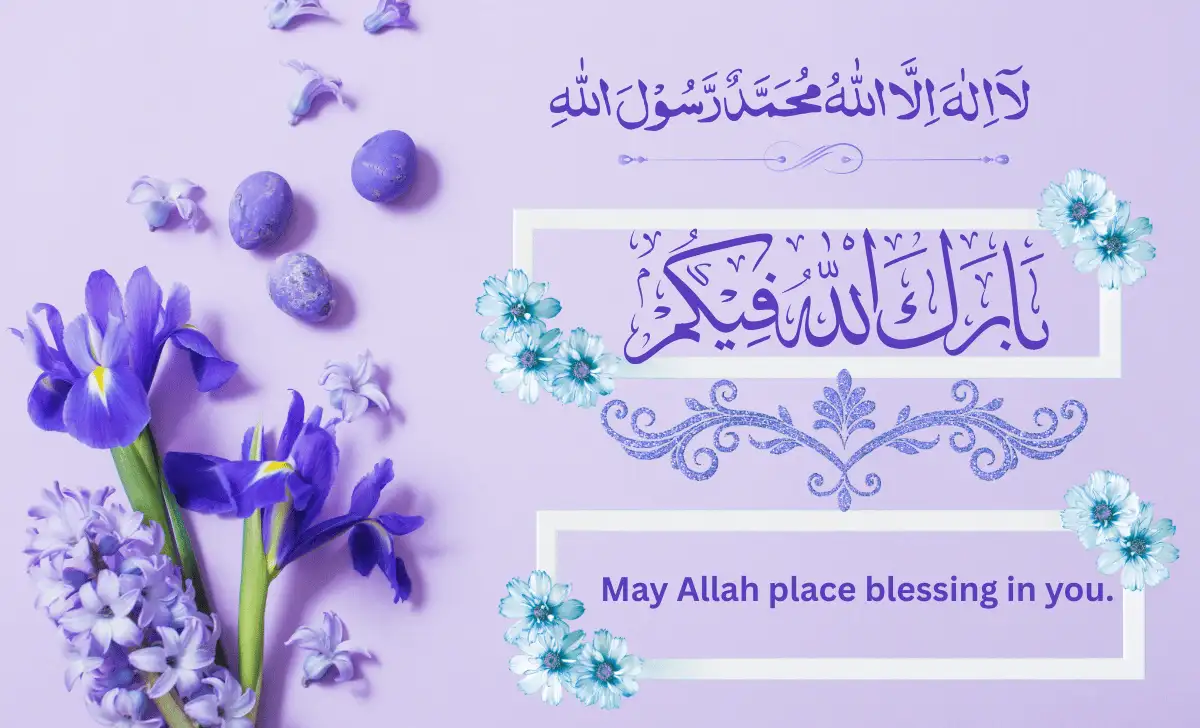
Barakallahu Feekum is a powerful Islamic dua used to pray for blessings in a person or group.
Simple Meaning
“May Allah place blessings in you.”
This phrase is not just a polite response. It is a sincere supplication (dua) asking Allah to put barakah in the life, actions, character, and efforts of the person.
Barakallahu Feekum in Arabic, Transliteration & Translation
Arabic
بَارَكَ اللَّهُ فِيكُمْ
Transliteration
Bārakallāhu Fīkum
English Translation
May Allah bless you (all).
Urdu Translation
اللہ آپ سب میں برکت عطا فرمائے
Root Meaning & Linguistic Analysis (Deep but Simple)
| Word | Meaning |
|---|---|
| Baraka (بَرَكَ) | To bless, to grant lasting goodness |
| Allah (اللّٰه) | Allah |
| Feekum (فِيكُمْ) | In you (plural) |
🔹 Key Insight:
The word “Feekum” means inside you, not just for you.
This makes the dua spiritually deeper.
Singular vs Plural Forms (Very Important for Correct Usage)
| Phrase | When to Use |
|---|---|
| Barakallahu Feek | For one male |
| Barakallahu Feeki | For one female |
| Barakallahu Feekum | For a group (male or mixed) |
| Barakallahu Feekunna | For a group of females |
⚠️ Common mistake:
Using Feekum for one person. This is grammatically incorrect.
When Should You Say Barakallahu Feekum?
You can say Barakallahu Feekum when someone:
- Helps you sincerely
- Gives Islamic knowledge
- Offers good advice
- Does a good deed
- Supports you in halal matters
It is better than a simple “thank you” because it is a dua, not just words.
Is Barakallahu Feekum Mentioned in the Quran?
❌ The exact phrase is not directly in the Quran
✅ But the concept of barakah is clearly mentioned
Quranic Evidence of Barakah
﴿لَفَتَحْنَا عَلَيْهِم بَرَكَاتٍ مِّنَ السَّمَاءِ وَالْأَرْضِ﴾
“We would have opened for them blessings from the heavens and the earth.”
(Surah Al-A‘raf 7:96)
This proves that making dua for barakah is fully Islamic.
Difference Between Barakallahu Feekum & Similar Phrases
| Phrase | Meaning |
|---|---|
| Barakallahu Feekum | May Allah bless you |
| Barakallahu Lak | May Allah bless what you have |
| Jazakallahu Khairan | May Allah reward you |
| Allahumma Baarik | O Allah, bless |
📌 Important:
Barakallahu Feekum focuses on inner goodness, not just reward or wealth.
Spiritual Benefits of Saying Barakallahu Feekum
Saying this dua sincerely can be a means of:
- Increasing good character
- Bringing barakah in time and efforts
- Strengthening brotherhood in Islam
- Making small deeds more impactful
- Earning reward for making dua for others
A person with barakah benefits others even with little.
Common Misunderstandings (Corrected)
❌ It is only cultural Arabic
✅ It is a valid Islamic dua
❌ It guarantees success
✅ No dua guarantees results; Allah decides
❌ It should only be said by scholars
✅ Anyone can say it sincerely
Wazifa-Section (With Authentic Boundaries)
Simple & Safe Practice
- Say “Barakallahu Feekum” sincerely when someone does good
- No fixed number
- No promises of miracles
- No replacement for obligations
📌 Intention matters more than repetition
Islam encourages sincere duas, not magical formulas.
Q&A
What does Barakallahu Feekum mean in Islam?
It means May Allah place blessings in you, and it is a sincere Islamic dua.
Is Barakallahu Feekum Sunnah?
It is not a fixed Sunnah phrase, but it is a permissible and recommended dua.
Can I say Barakallahu Feekum to anyone?
Yes, for good and halal actions, with sincerity and respect.
Urdu Section
بارک اللہ فیکم کا مطلب
بارک اللہ فیکم ایک اسلامی دعا ہے جس کا مطلب ہے:
اللہ آپ سب میں برکت عطا فرمائے
یہ جملہ صرف شکریہ نہیں بلکہ ایک روحانی دعا ہے جو کسی کے اعمال، نیت اور زندگی میں خیر کے اضافے کے لیے کی جاتی ہے۔
Final Thoughts
Barakallahu Feekum is:
- A meaningful Islamic dua
- Linguistically correct
- Spiritually deep
- Easy to use in daily life
Using it sincerely strengthens faith, relationships, and reward.