Have you ever felt a heavy weight in your chest that just won’t go away? In today’s fast-paced world, anxiety and “overthinking” have become silent storms in our lives. We seek peace in scrolling through social media, buying new things, or staying busy—yet the heart remains restless.
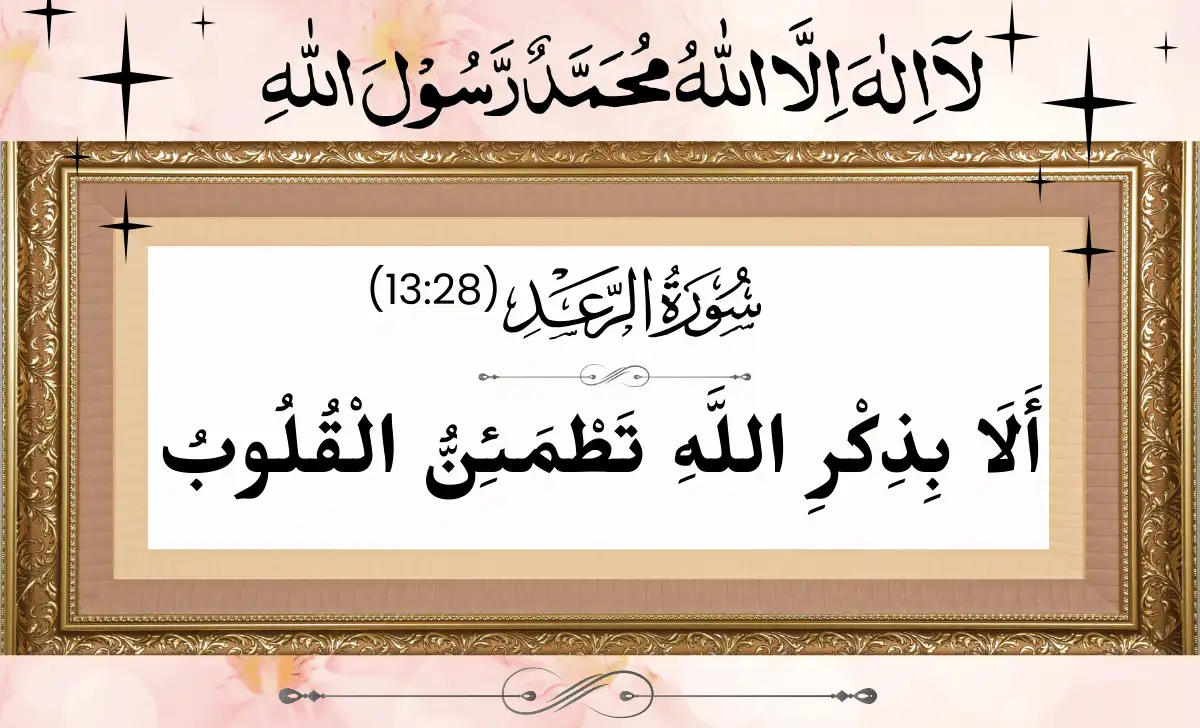
The Holy Quran provides a definitive, “one-sentence” remedy for this human condition in Surah Ar-Ra’d (13:28). Let’s explore how this verse can transform your mental health and spiritual life.
The Verse (Quran 13:28)
Arabic Text:
الَّذِينَ آمَنُوا وَتَطْمَئِنُّ قُلُوبُهُم بِذِكْرِ اللَّهِ ۗ أَلَا بِذِكْرِ اللَّهِ تَطْمَئِنُّ الْقُلُوبُ
Transliteration: Allazeena aamanoo wa tatma’innu quloobuhum bizikrillahi; alaa bizikrillahi tatmainnal quloob.
English Translation: “Those who have believed and whose hearts are assured by the remembrance of Allah. Unquestionably, by the remembrance of Allah do hearts find rest.”
Urdu Translation:
جو لوگ ایمان لائے ان کے دل اللہ کے ذکر سے اطمینان حاصل کرتے ہیں۔ یاد رکھو اللہ کے ذکر سے ہی دلوں کو تسلی حاصل ہوتی ہے۔
Why Does the Heart Find Rest in Dhikr?
Linguistically, the word “Ala” (أَلَا) is an “attention grabber.” It’s as if Allah is saying, “Stop! Listen carefully to this secret.” The word “Tatmain” refers to a state of tranquility where a bird finally settles in its nest after a long, tiring flight. Our hearts were created by Allah; therefore, they only feel “at home” when they are connected to Him.
Benefits of Reciting This Verse
- Instant Anxiety Relief: It shifts your focus from your “temporary” problems to the “Infinite” power of Allah.
- Neurological Calm: Repetitive spiritual chanting (Dhikr) has been shown to lower cortisol levels and activate the body’s relaxation response.
- Spiritual Shield: It protects the heart from Waswasa (whispers of Shaitaan) that cause fear and despair.
Authentic Hadith on Remembrance
The Prophet Muhammad (ﷺ) said:
“The comparison of the one who remembers Allah and the one who does not is like that of the living and the dead.” (Sahih Bukhari)
This tells us that a heart without Dhikr is like a house without a soul—it may look fine on the outside, but it is empty and cold on the inside.
How to Use This as a Wazifa for Anxiety
If you are struggling with panic attacks, stress, or a heavy heart, follow this “Heart-Healing Strategy”:
- The 7-7-7 Rule: After every Fard (obligatory) prayer, recite this verse 7 times.
- Hand on Heart: Place your right hand on your chest (over your heart) while reciting.
- Deep Focus: As you say “Tatmainnal Quloob,” visualize the light of Allah entering your heart and pushing out the darkness of worry.
- Bedtime Ritual: Recite it 11 times before sleeping to prevent overthinking at night.
Special Dua for Anxiety and Stress
The Prophet (ﷺ) taught this beautiful prayer for someone facing distress:
Arabic: اللَّهُمَّ إِنِّي أَعُوذُ بِكَ مِنَ الْهَمِّ وَالْحَزَنِ Transliteration: Allahumma inni a’udhu bika minal-hammi wal-hazan. Meaning: “O Allah, I seek refuge in You from anxiety and grief.”
The “Dhikr-Breath” Technique
This is a unique approach to help you connect your body and soul. When you feel a panic attack coming:
- Inhale slowly while thinking of the name “Allah.”
- Exhale slowly while reciting the phrase “Tatmainnal Quloob.” By syncing your breath with this powerful verse, you ground yourself in the present moment while inviting Divine peace into your nervous system.
My Final Reflection
As a blogger who has studied these verses deeply, I’ve realized that peace isn’t the absence of trouble—it’s the presence of Allah. Life will always have storms, but with Dhikr, your heart becomes a sturdy ship that cannot be sunk.
Next time you feel overwhelmed, don’t reach for your phone first. Reach for your Creator. Your heart is waiting to come home.
People Also Ask:
Surah Ar-Ra’d (especially verse 28) and Surah Ad-Duha are widely recognized for providing immense peace of mind and emotional healing.
Practice “Muraqabah” (mindfulness) and recite “Ala bizikrillahi tatmainnal quloob” whenever a negative thought enters your mind.
It means “the hearts find satisfaction/tranquility.” It describes a heart that is no longer agitated by worldly fears.