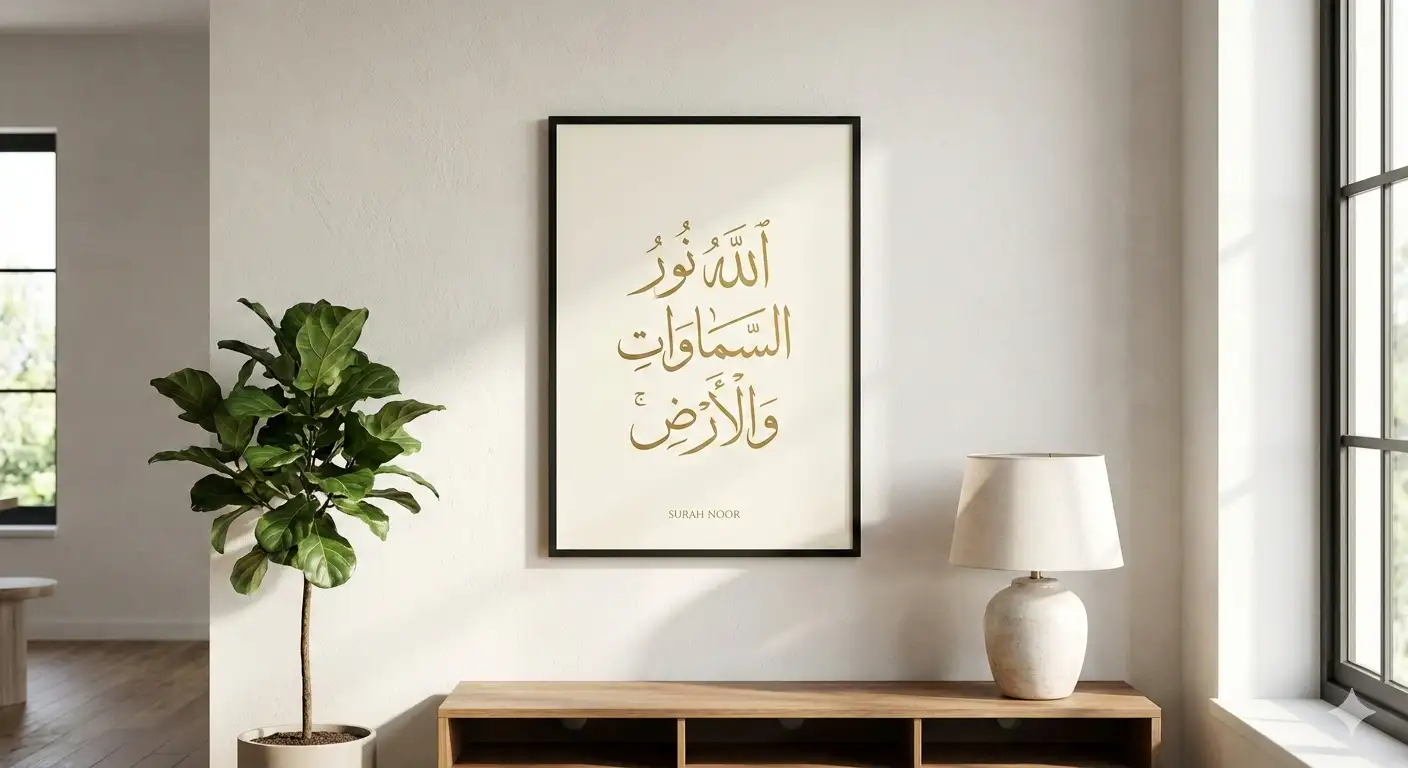
Have you ever felt like you’re walking through a thick fog? In our modern world, we are constantly bombarded with “digital noise,” anxiety about the future, and a strange sense of spiritual heaviness. I have often found myself looking for a “reset button” for my soul.
When I turned to Surah Noor Ayat 35, I realized it isn’t just a beautiful verse for calligraphy—it is a psychological roadmap. It describes Allahu nooru samawati wal ard (Allah is the Light of the heavens and the earth) in a way that can actually heal a cluttered mind.
Quick Reference Table for Readers
| Feature | Detail |
| Para (Juz) | 18 (قَدْ أَفْلَحَ) |
| Surah | Surah An-Nur (The Light) |
| Surah No. | 24 |
| Ayat No. | 35 |
| Revelation | Madani |
The Arabic Verse (Surah An-Nur 24:35)
اللَّهُ نُورُ السَّمَاوَاتِ وَالْأَرْضِ ۚ مَثَلُ نُورِهِ كَمِشْكَاةٍ فِيهَا مِصْبَاحٌ ۖ الْمِصْبَاحُ فِي زُجَاجَةٍ ۖ الزُّجَاجَةُ كَأَنَّهَا كَوْكَبٌ دُرِّيٌّ يُوقَدُ مِن شَجَرَةٍ مُّبَارَكَةٍ زَيْتُونَةٍ لَّا شَرْقِيَّةٍ وَلَا غَرْبِيَّةٍ يَكَادُ زَيْتُهَا يُضِيءُ وَلَوْ لَمْ تَمْسَسْهُ نَارٌ ۚ نُّورٌ عَلَىٰ نُورٍ ۗ يَهْدِي اللَّهُ لِنُورِهِ مَن يَشَاءُ ۚ وَيَضْرِبُ اللَّهُ الْأَمْثَالَ لِلنَّاسِ ۗ وَاللَّهُ بِكُلِّ شَيْءٍ عَلِيمٌ
Transliteration: Allahu noorus-samawati wal-ard. Mathalu noorihi kamishkatin feeha misbah. Al-misbahu fee zujajah. Az-zujajatu ka’annaha kawkabun durriyyun yooqadu min shajaratim-mubarakatin zaytoonatil-la sharqiyyatin wala gharbiyya. Yakadu zaytuha yudee’u walaw lam tamsashu nar. Noorun ‘ala noor. Yahdillahu linoorihi man yasha’. Wa yadribullahul-amthala lin-nas. Wallahu bikulli shay’in ‘aleem.
Urdu Translation (Jalandhari):
اللہ (وہ ہے جو) آسمانوں اور زمین کا نور ہے۔ اس کے نور کی مثال ایسی ہے جیسے ایک طاق جس میں ایک چراغ ہو۔ وہ چراغ ایک شیشے (کی قندیل) میں ہو۔ وہ شیشہ ایسا ہو جیسے ایک چمکتا ہوا ستارہ۔ وہ چراغ زیتون کے ایک مبارک درخت کے تیل سے جلایا جاتا ہو جو نہ مشرقی ہے اور نہ مغربی۔ اس کا تیل ایسا ہے کہ گویا خود بخود روشن ہو جائے گا چاہے اسے آگ نے نہ چھوا ہو۔ روشنی پر روشنی (یعنی دہری روشنی)۔ اللہ اپنے نور کی طرف جس کی چاہتا ہے رہنمائی کرتا ہے۔ اور اللہ لوگوں کے لیے مثالیں بیان کرتا ہے۔ اور اللہ ہر چیز سے واقف ہے۔
Surah Noor Ayat Deep Analysis, Tafsir, Sunnah Benefits (PDF)
The “Psychological Light” Framework: A Cure for Mental Fog
Most people read this verse as a physical description. But I want us to look at it as a metaphor for the human mind. In the Islamic tradition, classical scholars like Imam Al-Ghazali in Mishkat al-Anwar explained that our internal faculties are like the components of this lamp.
- The Niche (The Body): Think of your body as the physical structure. If the niche is broken, the light cannot be held. Taking care of your health is the first step to spiritual light.
- The Glass (The Heart): Your heart must be transparent. If it is clouded by anger, jealousy, or stress, the light within you becomes dim.
- The Oil (The Fitra): You were born with a “pure oil”—an innate goodness. Even before you read the Quran, your soul “almost glows” with the desire for truth.
- The Fire (The Revelation): When you connect your pure soul with the Quran, it is “Light upon Light.” This is the moment mental fog disappears and clarity begins.
Benefits of Reciting Surah Noor Ayat 35
While many search for specific worldly “wazifas,” the true benefits of this verse are deeply transformative:
- Cognitive Clarity: Regular reflection on this verse helps align your thoughts with your purpose, reducing “decision fatigue.”
- Spiritual Resilience: It reminds us that no matter how dark the “heavens and earth” feel, Allah is the source of all illumination.
- Strengthening Iman: It bridges the gap between the intellect and the heart.
Summary Table: The Elements of Light
| Element | Component | Spiritual Benefit |
| The Niche | The Body/Chest | Physical discipline & health |
| The Glass | The Heart | Emotional purity & sincerity |
| The Lamp | Faith (Iman) | Constant guidance & hope |
| The Oil | Inner Nature (Fitra) | Authenticity & self-awareness |
| The Fire | The Quran | External truth & revelation |
Authentic Sunnah Prescriptions (Wazifa of Light)
Instead of unverified numbers, I invite you to follow the Sunnah of the Prophet Muhammad (PBUH). He used to ask for light in every part of his being.
The Dua of Light (from Sahih Muslim): When the Prophet (PBUH) went to the Masjid, he would say:
“O Allah, place light in my heart, light in my tongue, light in my hearing, light in my sight, light behind me, light in front of me, light above me, and light below me. O Allah, grant me light!”
How to Practice:
- After Fajr: Recite Ayat 35 slowly. Visualize the light filling your heart (the glass) and clearing your worries.
- During Stress: Repeat the phrase “Noorun ‘ala Noor” (Light upon Light). It is a powerful reminder that Allah can add His light to your small efforts.
Conclusion: My Personal Reflection
I have found that whenever the world feels too loud, returning to the imagery of the Mishkat (the niche) brings an immediate sense of calm. This verse tells us that the light is already inside us (the oil); we just need to bring it close to the fire of Divine Remembrance to make it shine.
If you are struggling today, remember: Your heart is a “pearly star.” Don’t let the dust of the world hide its glow.
Deep Tafsir: The Anatomy of Divine Guidance
To truly understand Surah Noor Ayat 35, we must look at the Tafsir (exegesis) through the lens of masters like Ibn Kathir and Imam Al-Ghazali. They explain that this is not just a description of God’s glory, but a map of how God interacts with the human soul.
1. The Meaning of “The Light”
In his Tafsir, Ibn Abbas (RA) stated that “Allah is the Light” means He is the Guide of the inhabitants of the heavens and the earth. Just as physical light allows us to navigate a dark room, Allah’s guidance (Hidayah) allows us to navigate the confusion of life.
2. The Symbolism of the Lamp (The Human Soul)
The verse uses a very specific physical setup to explain a spiritual reality:
- The Niche (Mishkat): This represents the human chest. It is the boundary that protects the internal spiritual organs.
- The Glass (Zujajah): This is the heart. It is described as a “pearly star” because a believer’s heart must be clear of the “rust” of sin and doubt to let the light shine through.
- The Oil (Zayt): This is the Fitra (natural instinct). The Quran says the oil is so pure it “almost glows” on its own. This means every human is born with a natural inclination toward goodness and truth.
3. “Light Upon Light” – The Spark of Connection
This is the most profound part of the Tafsir. When the Light of the Fitra (the internal oil) meets the Light of Revelation/Quran (the external fire), it creates a magnificent explosion of clarity. This is “Light upon Light.” It suggests that the Quran doesn’t give you a “new” heart; it simply ignites the light that was already waiting inside you.
People Also Ask
It means Allah is the provider of guidance and the source of existence for everything in the universe. Without His light, we would be in physical and spiritual darkness.
According to authentic teachings, Noor is gained through consistent prayer (Salah), truthfulness, and reciting the Quran, specifically Surah Al-Noor.
The verse refers to the Olive tree. Scholars say it is “neither of the East nor West” because it is situated where it receives sunlight all day, making its oil the purest.