Have you ever worked your heart out on a project, only for it to fall apart at the last second? Or perhaps you made a choice that changed your life forever, and you wonder, “Was that really me, or was it meant to be?”
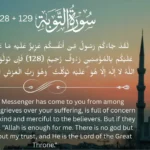
We often feel like we are the CEOs of our own lives. We stress over every “what if.” But the Quran gives us a secret formula to end this anxiety. This formula is found in the final verse of Surah At-Takwir.
1. The Divine Words (Arabic, English, and Urdu)
Before we analyze, let’s hold these words in our hearts:
Arabic Text:
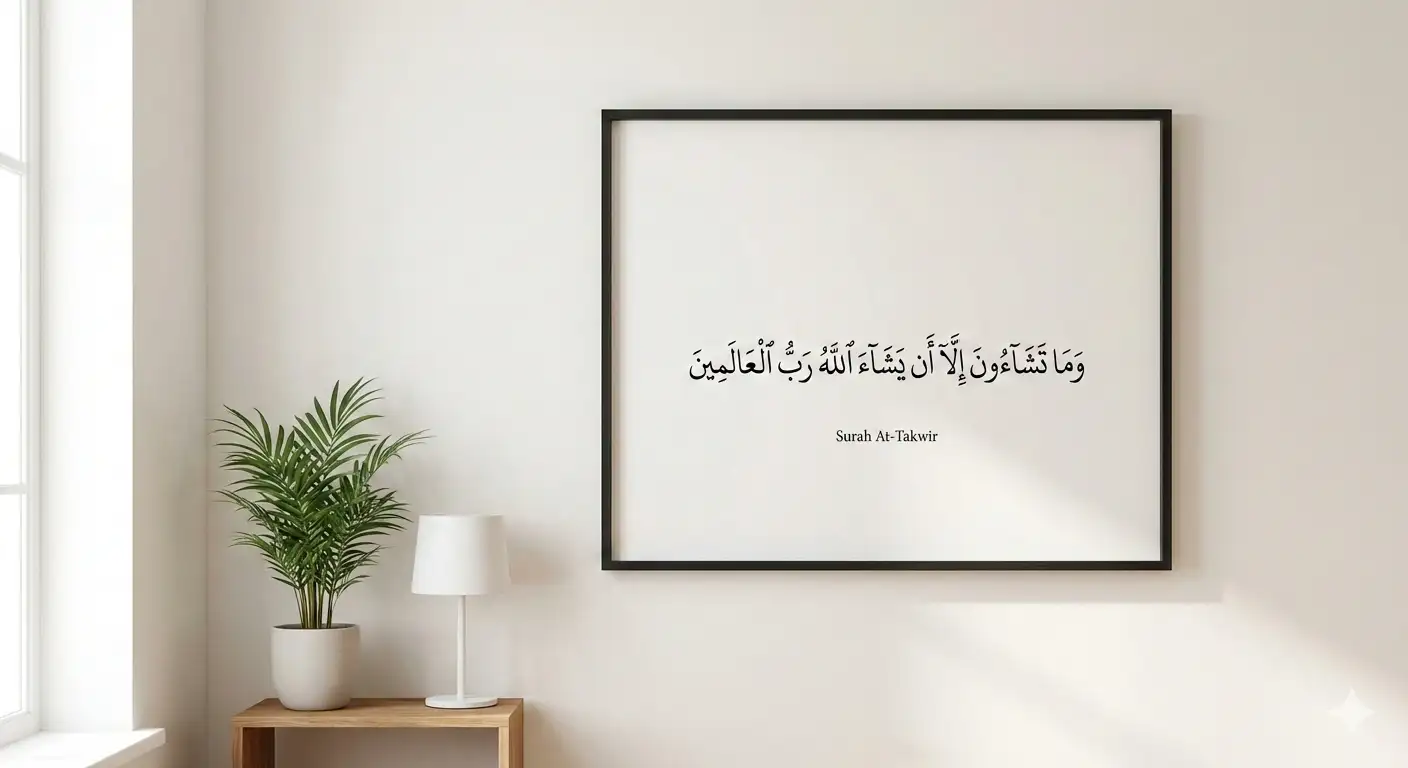
وَمَا تَشَاءُونَ إِلَّا أَن يَشَاءَ اللَّهُ رَبُّ الْعَالَمِينَ
Transliteration: Wama tasha’una illa an yasha’allahu rabbul ‘alamin.
English Translation: “And you do not will except that Allah wills – Lord of the worlds.” (Sahih International)
Urdu Translation (اردو ترجمہ):
“اور تم کچھ نہیں چاہ سکتے مگر یہ کہ اللہ چاہے جو تمام جہانوں کا رب ہے۔”
2. Classical Tafsir: The Authority Behind the Verse
we look at the giants of Islamic scholarship.
The Story of Abu Jahl (Sabab al-Nuzul)
According to Tafsir Ibn Kathir, when Verse 28 was revealed (“For whoever among you wills to go straight”), the arrogant Abu Jahl said: “The matter is up to us. If we want to be guided, we will.” Allah revealed Verse 29 immediately to show that no human has absolute independence.
The Wisdom of Tafsir As-Sa’di
Imam As-Sa’di explains that this verse refutes two extreme groups:
- The Jabariyyah: Those who say humans have no choice at all (like a feather in the wind).
- The Qadariyyah: Those who say humans have 100% control and Allah doesn’t interfere.
The Middle Path: Allah affirms you have a will (Tasha’una), but it only functions within His permission.
Linguistic Gem: “Rabbul ‘Alamin”
In Tafsir al-Jalalayn, the focus is on the title “Lord of the Worlds.” This means Allah doesn’t just “watch” you. He sustains the very ability you have to think and choose.
3. “The Permission Mindset”
Instead of saying, “I will do this,” start saying, “I will try, and I ask for Permission.”
- Step 1: The Sincere Intent. You choose to walk the straight path.
- Step 2: The Physical Effort. You do the work.
- Step 3: The Humble Surrender. You realize that if the “Lord of the Worlds” doesn’t provide the air, the health, and the opportunity, your will is just a thought.
Reflective Thought: If you succeeded today, it wasn’t just your “hustle.” It was a gift of permission from your Lord. Doesn’t that make the success feel more special?
1. The Rule of Firmness (Don’t say “If You Will”)
One of the most misunderstood concepts is saying “O Allah, forgive me if You will.” The Prophet (ﷺ) explicitly taught us not to do this.
- The Hadith: > “None of you should say: ‘O Allah, forgive me if You wish; O Allah, be merciful to me if You wish,’ but he should be firm in his asking, for Allah cannot be compelled.” (Sahih Bukhari & Sahih Muslim)
- The Lesson: Even though Verse 29 says nothing happens unless Allah wills, when you make Dua, you should be determined. Don’t act like Allah is hesitant. Ask with full confidence, knowing that He is the Rabbul ‘Alamin who loves to give.
2. The Istikhara Formula (Seeking the Best Will)
When you have a choice but don’t know the outcome, you use the Istikhara prayer. This is the ultimate application of Surah Takwir Verse 29.
- The Arabic Key Phrase:اللَّهُمَّ إِنِّي أَسْتَخِيرُكَ بِعِلْمِكَ وَأَسْتَقْدِرُكَ بِقُدْرَتِكَ “Allahumma inni astakhiruka bi’ilmika wa astaqdiruka biqudratika…” (O Allah, I seek the counsel of Your Knowledge, and I seek help from Your Power…)
- The Lesson: You are literally saying: “I have a will (I want this job/marriage), but I acknowledge that Your Knowledge and Will are superior. If this is good for me, make it happen. If not, turn it away.” This removes the “ego” from your decision-making.
3. The “Turner of Hearts” Dua
Since our will is controlled by our hearts, and our hearts are sustained by Allah, the Prophet (ﷺ) used this beautiful prayer frequently:
- The Hadith:يَا مُقَلِّبَ الْقُلُوبِ ثَبِّتْ قَلْبِي عَلَى دِينِكَ “Ya Muqallibal-qulubi, thabbit qalbi ‘ala dinik.” (O Turner of the hearts, make my heart steadfast upon Your religion.) (Sunan at-Tirmidhi – Sahih)
- The Lesson: This acknowledges that even our will to stay guided (referenced in Verse 28) requires Allah’s permission (Verse 29). It’s a humble admission that we need His constant “refresh” to stay on the right path.
4. When Things Go Wrong (Al-Qadar)
If you tried your best but the result wasn’t what you “willed,” the Prophet (ﷺ) gave us a specific phrase to protect our mental health.
- The Hadith: > “If something befalls you, do not say, ‘If only I had done such-and-such.’ Instead, say: Qaddarallahu wa ma sha’a fa’ala (Allah has decreed, and what He willed, He has done).” (Sahih Muslim)
- The Lesson: Using the word “If” opens the door to Shaytan (regret/depression). By saying “Allah willed it,” you instantly connect back to Rabbul ‘Alamin. You realize that the “failure” was actually a “success” in Allah’s larger plan.
6. Personal Reflection and Conclusion
I remember a time when I was desperate for a job. I “willed” it with all my might. I didn’t get it. I was crushed. Then I read this verse. I realized my “will” was small, but Allah’s “will” as Rabbul ‘Alamin was looking at the bigger picture.
Months later, a better door opened. My will had finally aligned with His.
My dear reader, what are you “willing” for right now? Are you stressing over the result, or are you ready to trust the Rabbul ‘Alamin?
Islamic Belief The Finality of Prophethood: Khatamun Nabiyeen Understanding the core pillar of Iman: Why Prophet Muhammad (ﷺ) is the Seal of the Prophets.
People Also Ask
The main message is balance. It teaches us that humans have the freedom to choose, but our choices only succeed if Allah allows them to happen.
No! Verse 28 encourages you to “will to go straight.” You must try. This verse simply tells you to stay humble once you do try.
Because a “Rabb” is a sustainer. It reminds us that our very existence and our power to choose are sustained by Him every second.
Think of Dua as a key. Allah has decreed that certain doors will only open when you use the key of Dua. Your “will” to make the Dua is part of His “will” to give you the blessing. They are not in conflict; they are in sync!