Introduction: Why Do Muslims Say “MashaAllah TabarakAllah”?
You see a beautiful child.
You admire someone’s success.
You notice a blessing—yours or someone else’s.
Instinctively, many Muslims say:
“MashaAllah TabarakAllah.”
But have you ever paused and asked:
- What does this phrase really mean?
- Is it cultural or Quranic?
- Why do scholars encourage saying it?
- Does it protect from nazar (evil eye)?
- And why is it more than just polite praise?
This article answers all of that—clearly, authentically, and deeply.
Arabic Phrase, Transliteration & Translation
📖 Arabic
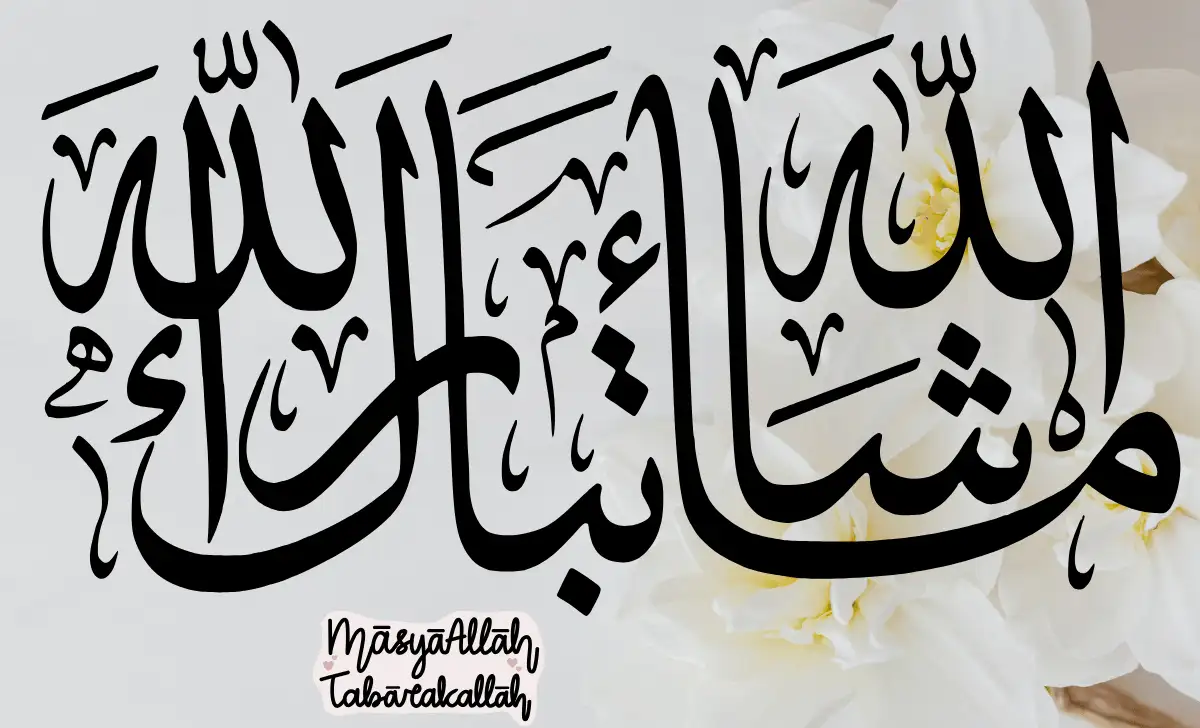
مَا شَاءَ اللَّهُ تَبَارَكَ اللَّهُ
🔤 Transliteration
Mā shā’ Allāh, tabārak Allāh
🌍 English Meaning
“What Allah has willed; Blessed is Allah.”
🟢 Urdu Meaning
“جو اللہ نے چاہا، اللہ بہت بابرکت ہے”
Understanding the Phrase (Word by Word)
1. MashaAllah (ما شاء الله)
- Means: Whatever Allah has willed
- A declaration that nothing exists without Allah’s permission
- Removes pride, ego, and hidden arrogance
➡️ When you say MashaAllah, you are saying:
“This blessing is not from me. It is from Allah.”
2. TabarakAllah (تبارك الله)
- From the root ب ر ك (barakah)
- Meaning:
- Ever-blessed
- Source of all goodness
- Blessings that increase and remain
➡️ It is not just praise—it is glorification of Allah’s perfection.
Quranic Foundation
📖 Surah Al-Kahf (18:39)
Arabic:
وَلَوْلَا إِذْ دَخَلْتَ جَنَّتَكَ قُلْتَ مَا شَاءَ اللَّهُ لَا قُوَّةَ إِلَّا بِاللَّهِ
English:
“Why did you not say, when you entered your garden, ‘What Allah has willed; there is no power except with Allah’?”
📌 Key Lesson:
Saying MashaAllah protects blessings from arrogance and loss.
MashaAllah TabarakAllah: An Islamic Way of Praising Blessings (Urdu PDF)
📖 “TabarakAllah” in the Quran
Appears in many places, including:
- Surah Al-Mu’minun (23:14)
- Surah Al-Furqan (25:1)
Always connected to:
- Creation
- Divine power
- Absolute perfection
➡️ Scholars explain that TabarakAllah is only used for Allah—never for humans.
Why Say “MashaAllah TabarakAllah” Together?
Many blogs stop at MashaAllah.
But combining both phrases achieves three things:
- Acknowledgment of Allah’s will
- Praise of Allah’s blessings
- Protection from envy and nazar
➡️ It turns admiration into worship, not jealousy.
When Should You Say “MashaAllah TabarakAllah”?
Use it when:
- You see something beautiful
- You admire someone’s achievement
- You talk about your own blessings
- You fear envy (yours or others’)
- You praise without wanting harm
➡️ Islam teaches controlled admiration, not silent jealousy.
Spiritual Psychology (Rarely Explained)
This phrase:
- Trains the heart to stay humble
- Stops envy at the verbal level
- Redirects praise toward Allah
- Preserves relationships
- Builds gratitude instantly
➡️ It is emotional intelligence taught by Islam.
The “PAUSE-Praise” Technique
Before praising anything:
P – Pause your tongue
A – Attribute blessing to Allah
U – Use MashaAllah
S – Seal with TabarakAllah
E – Express gratitude
This transforms a habit into a spiritual discipline.
Questions for Self-Reflection
- Do I praise without remembering Allah?
- Do I admire others secretly with jealousy?
- Do I say MashaAllah sincerely—or out of habit?
- Do I protect blessings or expose them?
Authentic Sources
- Quran – Surah Al-Kahf 18:39, Surah Al-Mu’minun 23:14
- Tafsir Ibn Kathir
- Lisān al-Arab (Arabic Lexicon)
- Classical Islamic scholarship on adab and nazar
Conclusion: A Phrase That Protects the Heart
MashaAllah TabarakAllah is not decoration for speech.
It is:
- A shield against ego
- A cure for envy
- A reminder of tawheed
- A key to preserving blessings
In a world full of comparison, this phrase teaches us how to admire without harming.
Say it slowly.
Say it sincerely.
And let your praise become worship.
People Also Ask
It means acknowledging that a blessing exists only by Allah’s will and praising Allah as the source of all barakah.
Yes. MashaAllah is explicitly mentioned in Surah Al-Kahf, and TabarakAllah appears multiple times across the Quran.
Scholars explain it helps prevent harm caused by envy, when said sincerely and correctly.
MashaAllah acknowledges Allah’s will.
Allahumma barik is a direct dua asking Allah to bless.